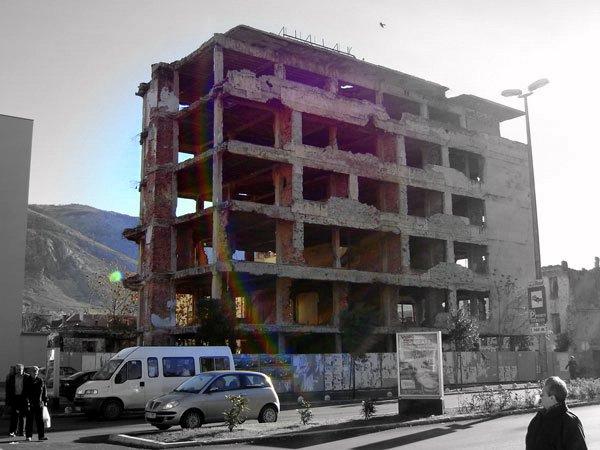
Wednesday, June 29, 2005

Tuesday, June 28, 2005
Mostar
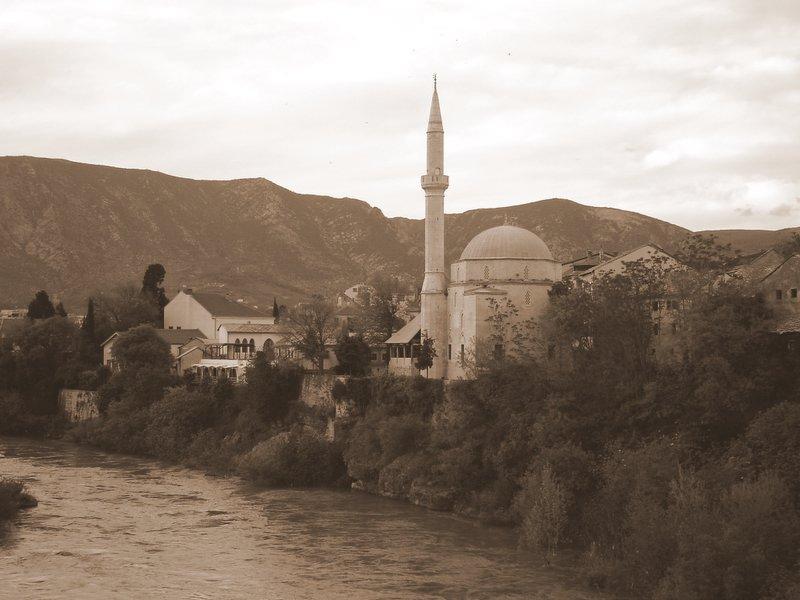
Until the end of of the 16th century and the fall of Klis, Mostar was the most important strategic base in the Turkish Empire in Herzegovina. Until it fell under Austro-Hungary rule in 1878, Mostar was one of the most important towns in Herzegovina. It developed on both sides of the bridge, along the left and right bank of Neretva. In Turkish times, trade, cottage industries and commerce flourished there. With the arrival of Austria-Hungary the town lost it former status, becoming a poor trade and commercial centre. Between the two wars it became the focus of revolutionary activity owing to the marked dissatisfaction of the inhabitants, wich was particularly well-expresed during the National Liberation War. Mostar is the town of poets, a town of progressive revolutionaries and national heroes. In postwar period Mostar has changed a lot...both economically and socially.
Elemental
REMI:
Čudan osjećaj u trbuhu, al nemoj mi ga kvarit
I danas mi je uspjelo – zaljubit se u male stvari
Neki put krivo je jutro, ili stranac ĹĄto te pozdravi
neki put je kriv hiphop beat ili rif na gitari
REFREN
Sunce, hvala ti, ĹĄto si izaĹĄlo za mene
Sunce, obećajem, misli su mi pozitivne
REMI:
ZakoraÄim u dan bez suviĹĄnih oÄekivanja
pitanja, nadanja, sita sam skrivanja.
Ljudi su opet sivi, njihov pogled grebe pod
i ĹĄutke gaze ubrzano, ne vide plavi svod.
Prezirno se smiju kad skuĹže da sam sanjar
jer su svjesni di Şive i kako Şive – jasna stvar.
I znam da je crnjak i da smo zapeli u sridu
u rukavu nosim osmjeh pa ga imam u vidu.
Dopusti mi... da te razoruĹžam
Otpuhni brige, primi sunce ĹĄto ti pruĹžam
SHOT:
Dobro skriveni u kockice,
mjesto ĹĄto zovu dom
s crnim povezom prek oÄiju
ne Ĺžude za slobodom
Zrake udare u njih al otpor je uvijek jak
ljudi izvana obasjani u sebi nose mrak
zbog njih nebo se zatvori
zaplaÄe kao dijete
ĹĄalje buru da oĹĄamari,
protrese
da se sjete onih malih stvari
zraka i sunca nad njima
da shvate
joĹĄ uvijek pozitivnih stvari ima
Monday, June 27, 2005
Saturday, June 25, 2005

Friday, June 24, 2005
red eye
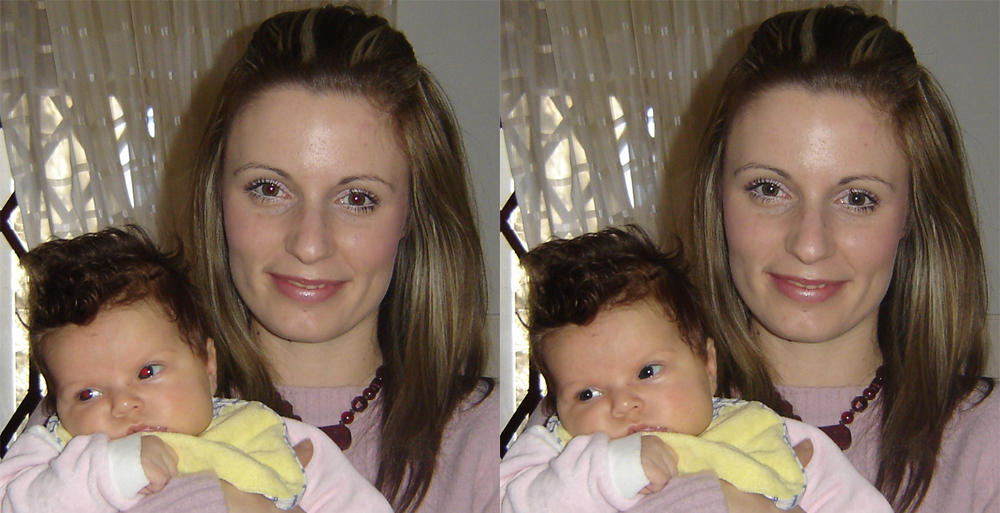
Today I learned how to remove red eye efect...just folow these steps..
1. Duplicate the background image layer so that if you mess up, you can easily
2. Select the Sponge tool from the toolbox.
3. On the Options bar, set the Mode control to Desaturate and the Flow setting
4. Choose a small, hard-edged brush. The brush should be smaller than
5. Click or drag over the red-eye pixels. The program sucks the color out of the
6. Create a new, empty layer by clicking the new layer icon in the Layers palette.
This layer will hold your new eye color. Set the layer blending mode to Color
7. Click the foreground color icon and choose a
8. Activate the Paintbrush tool. Again, use
that your paint strokes don’t have hard edges.
9. Dab on the new eye color as needed. If you don’t see any change, as may be
10. When you’re happy with your work, merge the image layers by choosing
You can use this same approach with any program that offers a Sponge tool,
Wednesday, June 15, 2005
Tuesday, June 14, 2005

Carthage
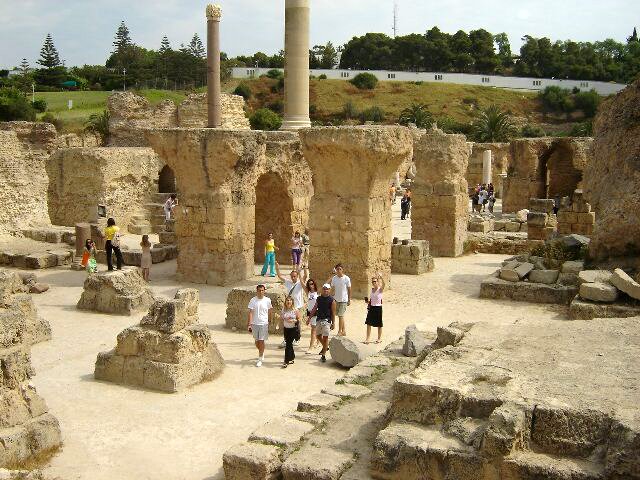
Carthage

The Romans returned to Carthage and built on its ruins a new Carthage resplendent with great buildings, theaters, villas and baths. Carthage became the administrative capital for Africa and its importance can be seen in the Antoinine Thermal baths, one of the largest built under the Roman empire with the "cool room" an amazing 47 meters long and 15 meters high. The Roman theater is still used today for the summer festival of Carthage.
(http://www.tourismtunisia.com/togo/carthage/carthage.html)
Doors of Tunis
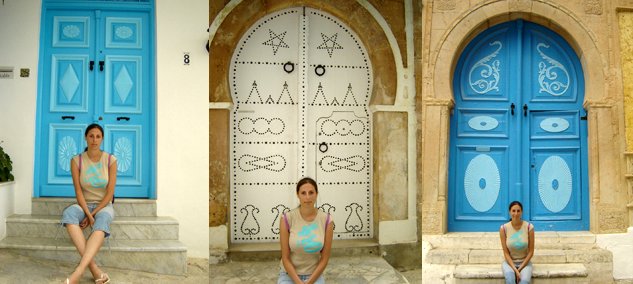
Sidi Bou Said this lovely blue and white village, gaily perched on the cliffs overlooking the Bay of Tunis, is perhaps the most cherished in Tunisia. The legend tells of Saint Louis - coming to wage war he fell in love with a Berber princess and, changing his name became the patron saint of this village where he lived in joy and peace. Visit Sidi Bou Said, fall under its charm and the story will seem most logical.
Monastir

Monastir, 9th century walls and an imposing Ribat tower over a modern resort complex and the result is amazingly harmonious. Monastir captures that blend of the traditional and modern that characterizes Tunisia. A marina nestled in the shade of the walls provides a enjoyable promenade as does the long avenue that offers the bluest of Mediterranean seas on one side and open air terraces of Hotels, restaurants and coffee houses from where you can enjoy the view.
The "monastery" after which the town was named, was built by an Islamic religious order in 797 to defend the town from roaming nomadic tribes and Byzantine warships. The fortress houses a lovely museum of Islamic art and artifacts.
Sousse

Sousse
On the eastern coast of Tunisia, two hours from the capital Tunis lies Sousse, "the pearl of the Sahel" . The mildness of its climate, its calm and beautiful coast and the hospitality of its people have long captivated those who came to conquer. Phoenicians, Romans, Byzantines and Arabs settled in this lovely "fertile city" each leaving their imprint and heritage. No wonder modern day visitors from all over the world find themselves at home and return again and again.
Sunday, May 22, 2005
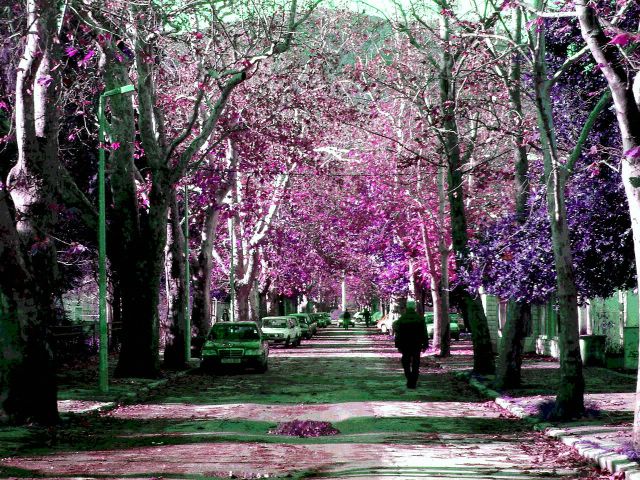
Neretva
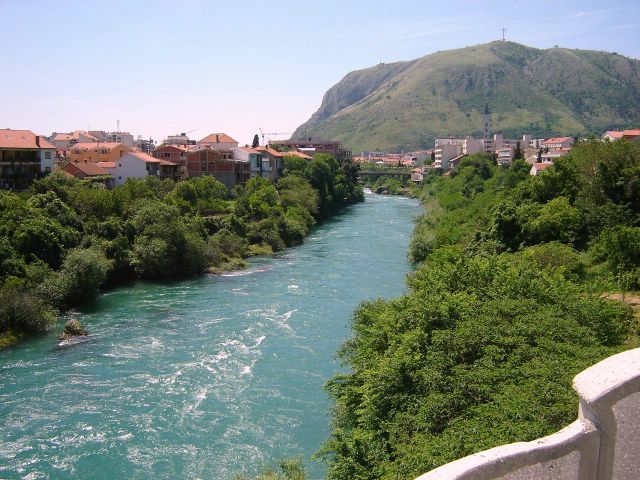
The disctrict of the commune of Mostar covers an area of 1125 sq.km in wich about 100,000 inhabitants live. The district of this commune lies in the centre of Herzegovina, on the border between its lower and upper, mountaonous, part. In the landscape of the district several features can be dististinguished such as Bijelo Polje, the ravine of Mostar, the Bisce Plain and the high mountains Prenj, Cabulja, Cvrsnica, Velez and others. The lower lime-stone mountains are denuded, showing all the form of bare karst. The most important thoroughfares in Herzegovina pass through its middle part - the valley of the Neretva. Owing to its favourable geographic position, to fertile areas in the Neretva valley and a convenient climate, this is the most populated district in Herzegovina.
Mostar..
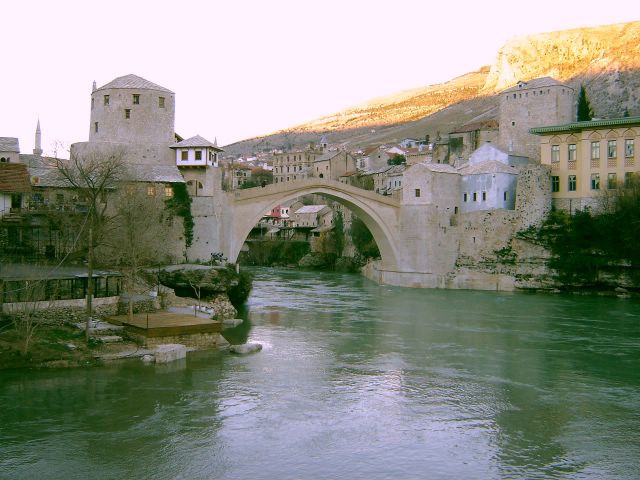
Mostar is the capital and the economic and cultural centre of herzegovina and the commune. The town is situadet on the border between lower and Upper Herzegovina in the extension of the Neretva valley, in the spacious ravine of Mostar, 59 m. above sea level. Unlike most others small Herzegovinian towns, whose settlements existed in ancient times, it dates from fairly recent times. The oldest records about Mostar are from the end of 15th century. Until then the medieval town of Blagaj, 15km. to the southeast of Mostar was the main centre of this district, and in the 15th century Blagaj was the capital of Herzegovina. The first historical records say that the settlement began around a wooden bridge with chains and towers. The development of this town is connected with the building of the magnificent stone bridge by the builder, Hujradin, the pupil of the great bilder, Sinan, when a parmanent connection between the eastern western parts of Herzegovina was established.
Friday, May 20, 2005


Subscribe to:
Posts (Atom)